


CryptoRush: Crypto Simulator
4.5804.00 Reviews
App Specs
- Version
- 1.9.7
- Updated On
- License
- Free
- Downloads
- 10,000,000+
- Developer
- CryptoRush - Trading Academy
- Categories
- Business
- Platform
- Android
Screenshots



 Analysis by AppCompare
CryptoRush: Crypto Simulator caught my attention because it approaches trading as practice rather than as a direct route into the real market. I tested it with that distinction in mind, especially from the perspective of a household where one phone or tablet may be used by more than one person. The app is free, belongs to the business category, and is made by CryptoRush - Trading Academy. Its central idea is simple: build trading skills in a simulated market environment without putting actual funds on the line.
That makes it easier to recommend to a curious beginner than a conventional trading platform, but it also creates an important boundary. This is a learning and practice tool, not a brokerage account, a savings product, or a substitute for financial advice. I found the best results came when I treated each session as an exercise in observation and decision-making rather than as entertainment that promised quick success.
How CryptoRush fits into shared everyday use
A realistic household example would be a parent using a tablet in the evening, then letting an older teenager explore the simulator later. One person might use it to understand market vocabulary, while the other practices deciding when to enter or exit a simulated position. That kind of shared use can work well because the app’s purpose does not require anyone to transfer money or connect it to a bank account.
Still, sharing a device does not automatically mean sharing progress. I would not assume that two people can safely use one profile as if it were a family account. If the app presents a single session or profile, mixing one user’s experiments with another person’s decisions can make the history difficult to interpret. My practical advice is to agree on whose practice session is active before starting, and to avoid treating a shared screen as proof that everyone has separate records.
This matters more than it might seem. A beginner can look at a simulated result and believe it reflects personal skill, when it may actually include choices made by someone else. In a household setting, I would use a simple notebook or a shared offline note to record the date, the idea being tested, and the reason for each decision. That small habit turns casual tapping into a more useful learning routine.
The strongest household use is guided practice, not unsupervised imitation. An adult can ask the learner to explain why a position was opened, what would invalidate the idea, and what emotion appeared when the simulated market moved against it. Those questions are more valuable than celebrating a lucky result. The simulator becomes a conversation starter instead of a shortcut to overconfidence.
What the first sessions are really good for
During an early session, I would focus on learning the app’s rhythm and vocabulary before trying to build a strategy. A useful first exercise is to make a prediction, write down the reason, and wait before judging whether it worked. The goal is not to collect wins. It is to compare the original reasoning with the later outcome.
Worth Reading Before You Choose

Flipboard Shows What News Apps Must Do Beyond the Feed

Switching to Android Auto Means Rethinking Your Driving Routine

Google Calendar Makes a Crowded Week Easier to Manage

Ludo King Makes the Most of the Minutes Between Plans

Baby Panda World Brings Quick Play to Modern Phones, but Its Game Library Feels Busy

ESPN’s Live Game View Makes Following Close Games Easier
A second exercise is to make deliberately different decisions in separate sessions: one cautious, one more aggressive, and one based on waiting. This helps reveal how much of the result came from timing rather than from a repeatable process. Because the environment is simulated, the learner can explore these contrasts without exposing household money to the consequences.
I also recommend discussing what the simulation cannot reproduce perfectly. A practice environment can help with discipline, planning, and recognizing patterns, but real trading includes emotional pressure, real losses, transaction conditions, and personal financial consequences. A strong simulated result should therefore be treated as evidence of a completed exercise, not as proof that someone is ready to trade live.
Setting boundaries before anyone taps the screen
CryptoRush is aimed at a mature audience, with a content rating of Mature 17+. In a home with younger children, I would not present it as a general family game or leave the device available without context. The subject itself involves financial behavior, risk, and market speculation, so age-appropriate supervision matters even when the activity uses simulated funds.
For older teenagers, the right approach depends on maturity and purpose. I would use it alongside a conversation about the difference between learning and investing. A teenager who is interested in economics may benefit from practicing careful observation, while someone attracted mainly by the excitement of fast gains may need firmer limits. The app can support a lesson about risk, but it should not be framed as a harmless competition where the biggest virtual return automatically wins.
Household boundaries should also cover time and attention. A short, planned session is more useful than repeatedly checking simulated movements throughout the day. I found that setting a clear question before opening the app—such as whether a decision was based on evidence or impulse—keeps the activity focused. Without that structure, a simulator can encourage the same restless checking habit that makes real financial apps stressful.
There is another boundary worth making explicit: never transfer the app’s simulated logic directly to a real exchange. A learner may become comfortable with opening and closing positions because the consequences feel distant. Before any real-money decision, that person would need separate knowledge about budgeting, risk tolerance, taxes, security, and the possibility of losing money. CryptoRush is useful before that stage, but it does not remove the need for those subjects.
Coordinating practice when more than one person uses it
Coordination is easiest when each user has a defined role. One person can make the decision while another acts as a skeptical observer, asking what would change the plan. Then they can switch roles. This avoids turning the app into a race and encourages explanations that are useful even when the simulated outcome is disappointing.
If the household has only one device, I would avoid handing it over in the middle of an unfinished exercise. Finish the observation first, record the decision, then let the next person begin. This prevents accidental changes and makes it easier to compare approaches. If several people want to use the app regularly, a paper log with initials is a surprisingly effective workaround for keeping personal experiments distinct.
Shared use also raises a privacy question. I would not enter personal financial information, payment details, or identifying notes into a practice session simply because the device is familiar. Keep real financial records separate, use the device’s normal security protections, and remember that a simulator does not need to become a household diary. These are sensible habits for any business app used on a shared phone.
Another useful coordination method is to agree on a review time rather than commenting on every market movement. For example, each person can complete an exercise independently and discuss the reasoning afterward. This reduces the chance that a confident user will influence everyone else before they have formed their own view. It also makes the app more educational for beginners who might otherwise copy the most assertive person in the room.
Trust, maturity, and the meaning of a virtual result
The app has a strong public footprint, with an average rating of 4.6 from around 154 thousand ratings and more than 5 million installs. Those figures suggest that many people find the concept approachable, but they do not tell me whether the app is suitable for every household or every learning style. Popularity can support confidence in its visibility; it cannot replace personal judgment about financial education.
I would explain the trust issue this way: the app can be trusted as a place to practice the decisions it simulates, but not as a guarantee that those decisions will work outside the simulation. That distinction should be repeated whenever a user starts talking about “winning” as if virtual performance were a forecast. The most trustworthy outcome is often a clearer understanding of why a decision was weak.
For a mature beginner, the app is most useful when paired with a written rule such as “I will not increase risk just to recover a poor result.” That rule can be tested in the simulator without real financial damage. A household discussion can then focus on behavior under pressure, which is a deeper lesson than memorizing a market term.
There is also a social risk. If one person consistently performs better in the simulator, others may assume that person has special talent and copy them. I would resist that dynamic. Ask each user to explain the reasoning independently, and compare the process rather than only the final virtual balance. A lucky sequence can make weak habits look impressive.
The version I reviewed is 1.9.4, and the app supports devices running Android 8.0 or later. That makes it practical for many older Android phones and tablets, although shared-device users should still check that the app runs comfortably on the particular device before planning regular sessions. The technical requirement is only one part of the decision; the more important question is whether the household can maintain clear boundaries around profiles, attention, and expectations.
Where it beats ordinary alternatives—and where it does not
Compared with opening a live trading account, CryptoRush is far less intimidating for a first encounter. There is no immediate pressure to deposit money, and a learner can concentrate on the sequence of a decision. Compared with watching videos or reading articles, it is more active: the user has to make choices and live with the simulated result. That hands-on element is the app’s clearest advantage.
Compared with a spreadsheet, the app is likely to feel more accessible to someone who wants an interactive environment rather than a blank grid. A spreadsheet, however, can be better for carefully documenting assumptions, calculating outcomes, and reviewing a long series of decisions. I would use CryptoRush for the first practical exposure and a separate written record for serious reflection.
Compared with a real exchange app, it is the safer starting point for someone who has not yet learned basic risk control. A live platform is the better tool only when a person already understands the financial consequences and has made a deliberate decision to invest real money. Even then, the simulator can remain useful for testing an idea before acting, but it should not be mistaken for a complete research system.
The trade-off is that a simulated environment can make decisions feel cleaner than they are in real life. The absence of real loss is a benefit for learning, but it also removes some of the emotional information that shapes live behavior. I would therefore judge the app by whether it improves patience and reasoning, not by whether it produces exciting virtual gains.
Small workflows that make the app more useful
My preferred workflow starts with a one-sentence hypothesis. Before making a simulated decision, write something like, “I expect this movement to continue because…” Then add one condition that would prove the idea wrong. This forces the user to define an exit from the idea before the result creates emotional pressure.
A second workflow is to review decisions in batches rather than individually. After several exercises, look for repeated mistakes: entering too quickly, changing the plan after a small movement, or confusing a favorable result with good reasoning. This is more revealing than celebrating each successful outcome, and it works particularly well when two household users compare notes without competing.
A third tip is to separate learning goals. One session can focus on timing, another on patience, and another on limiting impulsive changes. Trying to master everything at once makes it difficult to know what actually improved. The simulator becomes more valuable when every session has a narrow purpose and a short reflection afterward.
Finally, I would stop using the app when it begins to encourage compulsive checking or arguments at home. A business app should support understanding, not dominate the household atmosphere. Taking a break is not a failure; it is part of keeping simulated trading in its proper place.
Who should use it and who should skip it
I think CryptoRush is a good fit for an adult or mature older teenager who wants a low-stakes introduction to trading decisions, especially when that person is willing to keep notes and question their own assumptions. It is also useful for a household conversation about risk because the virtual setting gives people room to test ideas without placing family finances in the experiment.
I would skip it if the main goal is immediate real-money trading, guaranteed returns, or a replacement for professional financial guidance. I would also avoid presenting it to a younger child as a normal game, even though the activity is simulated. The mature rating and subject matter make context important.
It may also be the wrong choice for someone who wants detailed portfolio management, live execution, or a full investment research workspace. In those cases, a dedicated financial platform or educational course may be more appropriate. CryptoRush is strongest at the practice stage, where the user needs to slow down, make a decision, and inspect the reasoning behind it.
My overall view is positive but deliberately limited. The free price removes a major barrier to trying a simulated approach, and the app’s business focus is clear enough for beginners to understand its purpose. I would recommend it to a friend as a training ground, with the warning that a virtual result is not a financial credential.
For a shared household device, my verdict is the same with one extra condition: establish who is using the session, keep younger users away from unsupervised financial content, and discuss decisions instead of chasing scores. Used that way, CryptoRush: Crypto Simulator can turn curiosity into structured practice. Used carelessly, it can create false confidence. That difference comes less from the virtual market itself than from the boundaries the household sets around it.
Pros
- Easy way to learn basic crypto trading concepts without financial risk.
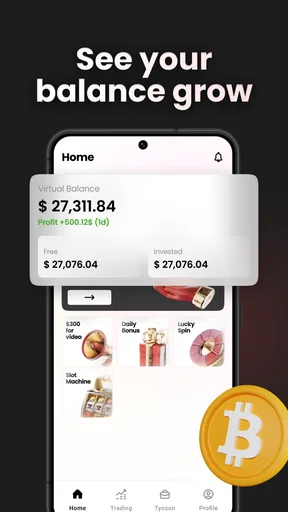
- Virtual portfolio makes it simple to track gains
- losses
- and performance.
- Useful for testing strategies before using real cryptocurrency exchanges.
- Short sessions suit users who prefer quick
- casual simulation gameplay.
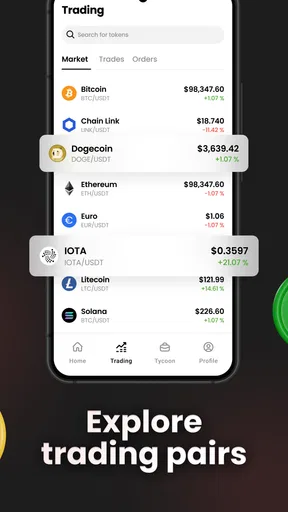
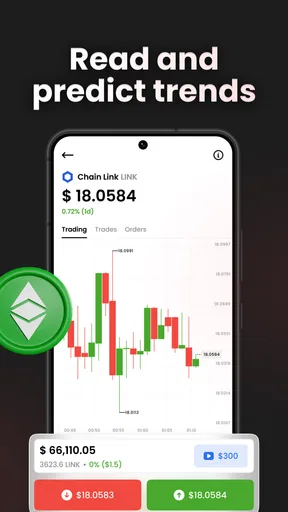
- Can make market trends and volatility easier for beginners to understand.
Cons
- Simulation results may not reflect real exchange fees
- slippage
- or liquidity.
- Market data accuracy and update frequency can affect the experience.
- Does not provide real cryptocurrency ownership or withdrawal options.
- Frequent price changes may encourage unrealistic expectations about trading.
- Advanced traders may find the available tools and analysis too limited.
FAQs for CryptoRush: Crypto Simulator
What is CryptoRush: Crypto Simulator?
CryptoRush: Crypto Simulator is a virtual cryptocurrency trading game designed to let players experience the excitement of buying, selling, and managing digital assets without using real money. It typically focuses on market movements, portfolio growth, and decision-making rather than actual blockchain transactions. The app is intended for entertainment and basic learning, not as a replacement for professional financial advice or a real investment platform.
Can I earn real money or withdraw cryptocurrency from CryptoRush?
No. CryptoRush: Crypto Simulator should be treated as a game with simulated funds and virtual progress. Any coins, profits, rankings, or portfolio values displayed inside the app are part of the gameplay and do not represent real cryptocurrency ownership. Players should not expect to withdraw money, transfer digital assets to an external wallet, or generate guaranteed income from their in-game performance.
Is CryptoRush: Crypto Simulator suitable for beginners?
Yes, the game can be suitable for beginners who want a simple introduction to cryptocurrency concepts such as price changes, buying, selling, risk, and portfolio management. Its simulated environment allows users to experiment without putting real funds at risk. However, beginners should remember that game mechanics may simplify real markets, while actual cryptocurrency trading includes fees, regulation, security concerns, and much greater financial risk.
Does CryptoRush require an internet connection or account?
The exact requirements may depend on the version installed and the device platform. Some features, such as market updates, advertisements, cloud saving, leaderboards, or synchronized progress, may require an internet connection. The app may also request account access for certain online services. Before installing, review the store listing and permission details, and avoid sharing unnecessary personal information if an account is optional.
Is CryptoRush: Crypto Simulator safe to download and use?
The safest approach is to download CryptoRush only through the official Google Play Store or Apple App Store, where the publisher, permissions, ratings, and privacy information can be checked. As with any free game, it may include advertising, analytics, or optional in-app purchases. Do not provide real wallet credentials, seed phrases, or private keys, and remember that the simulator should never require access to your personal cryptocurrency wallet.


